Who This Rayong Living Guide Is For (And Why I Wrote It)
If you’re thinking about living in Rayong as a retiree, remote worker, teacher, engineer, or long-stay expat then this guide was written with you in mind.
Rayong is one of Thailand’s most overlooked provinces, and most information online is either too shallow, too promotional, or focused only on tourism. Very few resources explain what everyday life in Rayong is actually like, how much it costs, where to live, or whether the province is a good fit for your lifestyle.
This guide fills that gap. I created it as I’m a regular visitor and, for me, it ticks all the boxes. So maybe you’ll consider it as your base in Thailand.
The aim is to give future expats and long-term travellers a realistic, detailed and practical overview of Rayong Province: its beaches, neighbourhoods, transport options, cost of living, healthcare, weather patterns, and long-stay visa possibilities. Whether you’re comparing Rayong to Pattaya, Bangkok, Chiang Mai or the islands, this guide will help you understand what makes Rayong different and who it suits best.
If you’re looking for a quieter, more affordable coastal lifestyle in Thailand, with easy access to Koh Samet, good hospitals, local food, and a down-to-earth community , then this guide will help you decide if Rayong is the right place for your next chapter.
Rayong Province at a Glance
Most people can name the famous Thai spots without thinking: Bangkok, Pattaya, Phuket, Chiang Mai.
Rayong rarely makes the list, even though it sits less than three hours from Bangkok and has a coastline that stretches for miles. It is one of those provinces that Thais know very well, but many expats overlook simply because it is not shouting for attention.
Rayong is a mixture of several worlds at once.
There is a proper Thai city with malls and hospitals. There are long beaches that Bangkok families take over on weekends. There is a huge industrial zone that quietly powers a big chunk of the Thai economy. And there is Koh Samet, one of the easiest islands in Thailand to escape to when you need white sand and blue water without booking a flight.
If you are trying to understand whether Rayong is worth considering for as a permanent base, this first section provides a clear, simple orientation.
1.1 Where is Rayong?
Rayong sits on Thailand’s eastern Gulf coast. To the west is Chonburi and Pattaya. To the east is Chanthaburi and, further along the coast, the Cambodian border. Rayong city is the provincial capital and sits a short distance inland from the beaches.
Distances in practice:
- Bangkok to Rayong city: around 145 km, usually 2.5 to 3 hours by car or minivan
- Bangkok to Ban Phe (pier for Koh Samet): roughly the same travel time
- U-Tapao airport to Rayong’s coast: about an hour, depending on the exact area
Rayong is close enough to Bangkok for regular trips but far enough that you will not feel swallowed by the city. Many people who do not want to live in Pattaya choose Rayong because it offers a quieter, more local lifestyle.
1.2 What Areas Make Up Rayong Province
When someone says they live in Rayong, they might mean any of several very different environments. These are the main ones:
Rayong City
The administrative and commercial centre. This is a typical Thai provincial city with busy roads, markets, shopping malls, schools and hospitals. There is a small expat presence, but it is overwhelmingly Thai in atmosphere.
Ban Phe and the mid-coast
Ban Phe is the mainland gateway to Koh Samet. It has seafood markets, piers and a friendly but local feel. Nearby are long beaches such as Mae Ramphueng and Suan Son. These areas are less developed than Pattaya or Hua Hin and are a mix of Thai family weekend areas and older resort zones. Some stretches are beautiful, others less so, depending on tides and maintenance.
Eastern coastline (Laem Mae Phim towards Klaeng)
This is a quieter beach zone with condos and modern developments. A mix of Thais and long-stay foreigners live here, especially retirees and people who want a peaceful beach base without the chaos of big tourist towns.
Industrial belt (Map Ta Phut and Ban Chang)
Rayong is home to one of Thailand’s largest industrial complexes. Map Ta Phut is known for petrochemicals, ports and manufacturing. Ban Chang is the residential town that many engineers and foreign staff choose because it sits between Pattaya and Rayong with easy access to U-Tapao airport. These areas are more work-focused than lifestyle-focused.
Islands (Koh Samet)
Technically part of Rayong province. Koh Samet is not somewhere most people live long term, but it is a key part of the lifestyle if you live anywhere along the coast. Many expats and long-stayers take regular weekend trips here.
One province, several completely different lifestyles. Where you choose matters a lot.
1.3 Rayong and the Eastern Economic Corridor
Rayong is one of the three core provinces in Thailand’s Eastern Economic Corridor, an ongoing national development project aimed at upgrading infrastructure, manufacturing, logistics and aviation across the eastern seaboard.
For Rayong, this means:
- Map Ta Phut is a major national industrial hub
- U-Tapao airport is expanding
- Road networks are improving
- The economy is not reliant on tourism alone
This is good news for job stability and long-term economic prospects. It also means the province is more practical and work-oriented than glamorous. Some people see smokestacks and factories as a dealbreaker. Others see steady jobs and modern infrastructure as a major advantage.
1.4 Who Rayong Suits Best
Rayong is not trying to be Chiang Mai, Phuket or even Pattaya. The people who tend to thrive here are:
Industrial expats
Engineers, managers, technicians and specialists working in Map Ta Phut or associated zones.
Teachers and regular job expats
Those who want a Thai city experience without the tourist circus.
Retirees who prefer authenticity over nightlife
People who want a quieter coastal lifestyle with Thai markets, seafood restaurants, long beaches and lower monthly costs.
Remote workers and seasoned long-stayers
People who do not need co-working spaces or a big digital nomad scene, but appreciate good home internet, quiet surroundings and access to an island whenever they feel like it.
Thai families from Bangkok
They shape a lot of the coastal atmosphere. Weekends and holidays feel lively with picnics, grill setups and big family gatherings.
1.5 Who Rayong Is Probably Not For
Rayong province has a very specific character. It is probably the wrong choice if you:
- Want a big expat social scene
- Expect tropical postcard beaches every day outside your front door
- Are sensitive to industrial areas or worried about seeing factories
- Need English spoken everywhere
- Want Western nightlife or a large international food scene
Rayong is best for people who value authenticity, practicality and a blend of coastal and city life. If you arrive expecting it to be the next Phuket, you will be confused. If you come expecting a quieter, more affordable place with access to Bangkok and a proper island nearby, then you will quickly understand why many people settle here long term.

2. Cost of Living in Rayong Province
If you ask ten expats why they chose Rayong, at least half will mention the cost of living somewhere in the first two sentences. Rayong sits in a sweet spot: cheaper than Bangkok and Pattaya, but still offering real infrastructure, hospitals, beaches, shopping, and a city that functions perfectly well without needing English menus at every café.
If you want a coastal lifestyle without burning through 60,000 to 100,000 baht per month, Rayong is one of the easiest places in Thailand to do it.
Below is an honest breakdown of what you can expect to spend, from bare-bones living to something more comfortable. These figures come from how people actually live here, not fantasy-budget bloggers who claim you can live like royalty on 10,000 baht.
2.1 What Life Costs in Rayong Compared to Other Thai Cities
A simple way to think about Rayong:
- Cheaper than Bangkok, Phuket, Chiang Mai and Hua Hin
- Slightly cheaper than Pattaya, depending on where you stay
- Similar day-to-day costs to most Thai provincial cities
- Better value for rent than almost anywhere on the coast within three hours of Bangkok
Where Rayong really stands out is rent. You can live near the beach, or in a comfortable house, or in a modern condo, for noticeably less than comparable areas in Chonburi, Bangkok or Hua Hin.
Food, transport, utilities and general expenses are “normal Thai prices”, with the biggest variations coming from your own habits: cooking at home vs eating Western food, riding a motorbike vs driving a car, cooking Thai food vs supermarket imports, etc.
2.2 Example Monthly Budgets (Realistic, Not Fantasy)
These examples assume a single person or a couple. Families are covered further below.
Basic Budget (Local-style living): 25,000 – 30,000 baht
This is for someone who:
- rents a small condo or studio in Rayong city or Ban Chang
- eats mostly Thai food
- uses a motorbike
- goes to the beach sometimes but doesn’t live on it
- does not drink heavily or buy Western groceries regularly
It is possible. Many teachers, engineers on lower salaries and long-stayers do it. It is not luxurious, but it is perfectly livable.
Comfortable Budget (Most expats): 35,000 – 55,000 baht
This fits someone who:
- rents a one-bedroom condo or small house
- lives near the coast or in Rayong city
- mixes Thai and Western meals
- has a motorbike and occasionally uses taxis
- takes normal trips to Koh Samet, Pattaya or Bangkok
- buys some imported groceries, but not constantly
Most people fall into this range.
Higher Comfort / Long-term base: 60,000 – 90,000 baht
You are living very comfortably if you spend this much. It usually means:
- a nice condo or two-bedroom house near the beach
- regular trips to Bangkok
- eating Western food several times a week
- owning a car
- going out for drinks or meals more often
- higher-end health insurance
Still cheaper than Phuket or Bangkok for the same lifestyle.
Small Family Budget: 80,000 – 120,000+ baht
Families need to consider:
- larger accommodation
- schooling
- transport
- more Western food
- healthcare and insurance
Families usually choose Rayong city or Ban Chang for convenience, schools and hospitals, though the coast is fine if you have a car.
2.3 Detailed Cost Breakdown
Rent
Rayong’s rent is one of its biggest advantages. Prices vary by area:
Rayong City
- Basic condo or studio: 5,500 – 8,000 baht
- One-bedroom condo: 8,000 – 12,000 baht
- Two-bedroom condo: 12,000 – 18,000 baht
- Small house: 9,000 – 15,000 baht
Ban Phe, Mae Ramphueng, Suan Son
- Older beachside apartments: 6,000 – 10,000 baht
- Modern condos: 10,000 – 18,000 baht
- Detached house or townhouse: 10,000 – 20,000 baht (area varies a lot)
Laem Mae Phim and Eastern Coast
- Condos with sea views: 12,000 – 25,000 baht
- Newer developments: sometimes higher, depending on quality
- Houses: 12,000 – 20,000 baht for mid-range options
Ban Chang
- Townhouses and houses: 8,000 – 18,000 baht
- Condos: 7,000 – 15,000 baht
- Popular with engineers, so quality varies depending on employer influence
If you are flexible and don’t need beachfront, Rayong has some of the best-value rentals within a few hours of Bangkok.
Utilities
Costs depend heavily on AC usage.
- Electricity: 1,000 – 3,500 baht per month
- Water: 150 – 300 baht
- Fibre internet: 400 – 900 baht
- Mobile SIM package: 200 – 350 baht
- Rubbish collection: usually included or negligible
Electricity is the only variable that significantly jumps if you run multiple air conditioners every evening.
Food
Food is one of the easiest expenses to control.
Local Thai food
- 45 – 70 baht per dish
- Market meals: 40 – 70 baht
- Street food: 10 – 30 baht snacks
Seafood restaurants
- 150 – 300 baht per dish
- Fresh seafood by weight varies a lot, especially near Ban Phe
Western meals
- Casual restaurant: 180 – 350 baht
- Imported steak / Italian / steakhouse: 400 – 800 baht per dish
- Western groceries: double or triple Thai equivalents
You can eat cheaply or expensively depending on your preferences. Western groceries are often the biggest culprit in budget blowouts.
Transport
Rayong is not a small town where you can get around on foot. You’ll need transport.
Motorbike
- Purchase: 35,000 – 70,000 baht for a standard Honda/Yamaha
- Monthly petrol: 400 – 800 baht
- Maintenance: very cheap
Car
- Used car: 120,000 – 300,000 baht minimum for something reliable
- Petrol: 2,000 – 4,000 baht
- Insurance: varies widely
- Parking: rarely an issue except Rayong city centre
Local transport
- Songthaews cover certain routes but are not frequent
- Taxis are limited outside Rayong city
- Grab works in Rayong city but occasionally on the coast
- Realistically, you need your own wheels unless you live in the city centre
Healthcare
Rayong has good healthcare for a provincial area.
- Public hospital visits: 100 – 300 baht
- Private GP visits: 400 – 700 baht
- Specialist consultations: 700 – 1,500 baht
- Insurance: 2,000 – 8,000 baht per month depending on age and coverage
Many expats in Rayong go to private hospitals in the city, or specialist centres in Pattaya or Bangkok for more complex treatments.
Schooling (for families)
Rayong does not have the same number of international schools as Bangkok or Pattaya, but there are local options:
- Bilingual schools: 60,000 – 120,000 baht per year
- International schools (depending on level): 150,000 – 350,000 baht per year
- Transportation for kids: varies depending on your location
Families should expect schooling to be one of their largest expenses.
Other Regular Costs
- Gym membership: 700 – 1,500 baht
- Coffee in a café: 50 – 80 baht for Thai coffee, 80 – 120 baht for Western style
- Alcohol:
- Local beer: 50 – 70 baht from 7-Eleven, 90 – 120 baht in bars
- Wine: expensive everywhere in Thailand
- Cleaning services: 300 – 500 baht per visit
- Occasional Koh Samet trips: 150 – 200 baht ferry plus whatever you spend eating and drinking on the island
2.4 One-Off Setup Costs When Moving to Rayong
If you are planning to stay long-term, it is worth budgeting for a few initial expenses:
- Rental deposit: usually one or two months
- Buying a motorbike or car if needed
- Household items: bedding, cooking equipment, fans, basic furniture
- Visa and immigration costs depending on your situation
- First month of insurance if you take out a new policy
Many rentals in Rayong come partially furnished, but you may still want or need to buy a few essentials.
2.5 Summary: How Expensive Is Rayong Really?
Rayong is one of the better-value provinces in Thailand for long-term living. It is not as cheap as small inland cities, but it offers far more in terms of beaches, amenities, access to Bangkok, and steady services.
You can live here cheaply if you want to. You can also live here very comfortably without spending anywhere near what you would in Bangkok or Phuket.
The main takeaway is simple:
Rayong gives you coastal living, a functioning city, and access to an island, without the price tag of major tourist areas.
Here is Section 3: Best Places to Live in Rayong Province, written in the same natural, human tone as Sections 1–2, with no citations, no AI markers, and ready to paste straight into WordPress.
This section is detailed, practical, and aimed at helping readers understand the very different lifestyles available within one province.
3. Best Places to Live in Rayong Province
Rayong is one province, but it feels like several different “mini-Thailands” stitched together. Choosing the right area makes the difference between loving your time here and wondering why you ever considered it.
Some parts of Rayong feel like a relaxed beach town. Some feel like a normal Thai city. Some feel like the edge of a giant industrial complex. And some offer a surprisingly peaceful retirement-style coastal life.
This section breaks down each key area so you can match your lifestyle to the right part of the province.
3.1 Rayong City (Mueang Rayong)
Rayong city is the administrative, commercial and practical heart of the province. If you want convenience above scenery, this is where life is easiest.
What it’s like
Rayong city looks and feels like a medium-sized Thai city. Busy roads, fresh markets, street food, shopping malls, Thai-style pubs and a good choice of clinics and hospitals. It’s not touristy at all. Most foreigners here work in teaching, industry, logistics or long-term business roles.
Why live here
- Close to hospitals, government offices and immigration
- Cheaper rent than coastal areas
- Lots of Thai food options and proper markets
- Easy access to transport routes
- Not overly dependent on tourism
Why not live here
- Heavy traffic in peak hours
- Not much greenery or beach access
- Limited Western dining and nightlife
- Feels practical rather than “tropical”
Who it suits
Teachers, long-term expats who prefer city infrastructure, retirees who don’t care about beach views, and anyone needing to be close to hospitals or schools.
3.2 Ban Phe and the Mid-Coast: Mae Ramphueng, Suan Son & Khao Laem Ya
This is one of Rayong’s most interesting belts for long-stay expats because it offers a mix of coastal living, easy access to Koh Samet, and a very Thai atmosphere.
Ban Phe
Ban Phe is the mainland pier town for Koh Samet. It’s a friendly, slightly scruffy port with markets, seafood stalls and relaxed local life. There’s a small but steady foreign community, more low-key than anything found in Pattaya.
Mae Ramphueng
A long, wide beach stretching west of Ban Phe. The atmosphere varies week to week. Some days it’s quiet enough to feel like a private escape. Other days it fills with Thai families, weekend picnics, and the occasional school trip. It is still one of the better-value coastal stretches within a few hours of Bangkok.
Suan Son & Khao Laem Ya
Further east are pine-lined roads, shaded picnic areas, quieter beaches and access to the national park. It feels peaceful and distinctly Thai, especially outside weekends.
Why live here
- Easy trips to Koh Samet
- Long beaches for walking and swimming
- Quiet weekdays with lively Thai weekend energy
- Close enough to Rayong city for errands
- Mix of older apartments and newer condos
Why not live here
- Beach maintenance and cleanliness vary
- Not many Western-style conveniences
- Occasional seasonal issues like jellyfish or strong currents
- Songthaew routes are limited
Who it suits
Retirees, remote workers, long-stay beach lovers, and anyone who wants coastal life without tourist chaos.
3.3 Eastern Coastal Strip: Laem Mae Phim, Chakphong & Beyond
If you want something quieter, more modern, and with a growing foreign community, the eastern Rayong coast is worth serious attention. This area has more resort-style developments, better-kept beaches, and a slower pace of life.
Laem Mae Phim
A semi-developed beach community with condos, beachfront restaurants, seafood places and a calmer vibe than Mae Ramphueng. Many Scandinavian long-stayers choose this area for its balance of beach, comfort and value.
Chakphong & eastern villages
Heading further east you’ll find small coastal neighbourhoods, fishing communities, and pockets of expatriates who have settled here long-term precisely because it is peaceful and not overrun with tourists.
Why live here
- Relaxed beach lifestyle
- Newer condos and developments
- Good for couples and retirees
- More predictable beach conditions
- Very quiet, especially outside high season
Why not live here
- Limited nightlife
- Few international restaurants
- Public transport almost nonexistent
- You really need your own vehicle
Who it suits
Retirees, couples, long-term foreigners who prefer stillness over stimulation, and anyone who wants a slow-living coastal environment.
3.4 Ban Chang and the Industrial Fringe
Ban Chang is where many foreign engineers and technical workers end up. It sits between Rayong and Pattaya, close to both the industrial estates and U-Tapao airport. It is also one of the few places in Rayong where you will see a noticeable farang presence.
What it’s like
Ban Chang is a real Thai town but with more foreign-oriented businesses than most parts of the province. You’ll find pubs, Western restaurants, sports bars, golf courses and a social scene tied to the industrial workforce.
Pros of living here
- Closest base to the large industrial zones
- Good rental selection for workers on contracts
- More English spoken than other Rayong towns
- Easy access to Pattaya, which is 30 to 40 minutes away
- Practical location for travel via U-Tapao airport
Cons
- Far from the best beaches
- Very limited tourist appeal
- Can feel spread out and functional
- Heavy vehicle traffic around industrial areas
Who it suits
People working in the industrial estates, retirees who want more Western food and nightlife than the coast offers, and long-term expats who prefer being near other foreigners.
3.5 Koh Samet (as a Lifestyle Add-On)
Most people will not base themselves on Koh Samet full-time, but its role in the Rayong lifestyle is significant. Living anywhere along the coast means you can reach the pier in minutes and be on the island shortly after.
What Koh Samet offers Rayong residents
- Quick weekend island trips
- Beautiful beaches
- A mix of Thai and foreign visitors
- Good beach bars and nightlife for occasional fun
- A proper island vibe without flying anywhere
Why you wouldn’t live there full time
- Limited rentals for long-stay foreigners
- Higher prices for basics
- Logistics can be inconvenient
- Fewer services and no real hospitals
But as a place to escape to regularly, it’s a major perk of living in Rayong.
3.6 Summary: Choosing the Right Area in Rayong
If you want convenience and city life, choose Rayong City.
If you want affordable coastal living close to Koh Samet, choose Ban Phe / Mae Ramphueng / Suan Son.
If you want a quieter, modern, low-rise beach lifestyle, consider Laem Mae Phim or the eastern coast.
If you work in the industrial sector, Ban Chang makes most sense.
If you want beaches at your doorstep, but without living on an island, then anything from Ban Phe to Mae Phim can work well.
Rayong has no single “best” area, which is why it appeals to such a variety of long-stayers. You simply pick the lifestyle you want, then choose the part of Rayong that matches it.
Here is Section 4: Work, Economy and the Eastern Economic Corridor, written in the same tone and style as Sections 1–3.
No citations, no AI markers, no em dashes.
Long, detailed, authoritative, and ready for WordPress.

4. Work, Economy and the Eastern Economic Corridor (EEC)
Rayong is not a typical expat beach province. It is one of Thailand’s economic workhorses, and that reality shapes almost everything about life here. The coastline may look relaxed, but behind it sits one of the country’s most important industrial zones, a major port, and a growing aviation hub.
If you are thinking of living in Rayong for work, for long-term stability, or for a quieter life with good infrastructure, it helps to understand what drives the local economy and how the Eastern Economic Corridor fits into the bigger picture.
4.1 What the Eastern Economic Corridor (EEC) Actually Is
The EEC is a long-term national development project aimed at turning Thailand’s eastern seaboard into a high-tech manufacturing and logistics region. Rayong sits right at the centre of this plan.
The basic idea of the EEC is simple:
- Attract foreign investment
- Modernise manufacturing
- Improve ports, airports and rail links
- Create thousands of skilled jobs
- Turn the region into a major industrial and logistics hub in Southeast Asia
This is not theory. It is already happening, and Rayong is one of the provinces where you see the results directly.
4.2 Rayong’s Role in Thailand’s Industrial Landscape
Rayong is one of the country’s most important provinces for heavy industry. It is home to:
- The Map Ta Phut Industrial Estate
- Several manufacturing and petrochemical complexes
- A deep-sea port
- Logistics hubs serving both Chonburi and Bangkok
- Expanding industries in energy, chemicals, automotive parts, plastics, and advanced manufacturing
This is why many foreigners who live in Rayong are here for work contracts, engineering roles, specialist technical jobs, or management positions within large companies.
Rayong is not dependent on tourism to survive. That gives it a level of economic stability that many coastal provinces do not have.
4.3 The Map Ta Phut Industrial Estate
Map Ta Phut is one of Thailand’s largest industrial zones and is often the reason foreign professionals move to Rayong in the first place. It includes petrochemical plants, manufacturing facilities, warehouses, ports and logistics operations.
From the outside, it is not scenic. It looks exactly like what it is: a massive industrial engine powering a significant part of the national economy.
For workers, however, it offers:
- Good salaries compared to typical local jobs
- Long-term contracts
- A predictable, professional work environment
- Opportunities for specialists with technical backgrounds
Living near Map Ta Phut is more functional than beautiful, which is why many expats choose Ban Chang or Rayong city as their base and commute in.
4.4 U-Tapao Airport and Future Growth
U-Tapao airport sits just outside Rayong’s provincial border, close to Ban Chang. The airport is being expanded and modernised to support both commercial flights and the EEC, and there are long-term plans for:
- Increased domestic and international flight routes
- Improved cargo handling
- A connection to the planned high-speed rail line linking three major Bangkok-area airports
If these plans continue moving forward, Rayong will become even more connected, making it easier for long-stayers, investors and remote workers to treat the eastern coast as a practical base.
4.5 Job Opportunities for Foreigners in Rayong
Rayong is not the kind of place where you arrive on a tourist visa and stumble into a job teaching English or freelancing from a café. Most foreigners who work here have one of the following career paths:
1. Industrial and engineering roles
The industrial estates employ foreign specialists in:
- Chemical engineering
- Mechanical engineering
- Quality control
- Factory management
- Industrial safety
- Process engineering
- Energy and utilities
- Port operations
These roles are usually tied to multinational companies or major Thai corporations.
2. Teaching jobs
Rayong city has public and private schools, bilingual programmes and language centres that regularly hire foreign teachers. Salaries vary but are generally higher than small inland towns and lower than Bangkok.
3. Corporate roles
Some expats work in logistics, supply chain, sales, technical support, finance, or administrative roles within companies based in Rayong or the EEC region.
4. Remote workers
Rayong is not a digital nomad hotspot, but it does attract remote workers who prefer a quieter lifestyle, good internet, and access to the coast. These tend to be mid-career professionals already used to Thailand rather than first-time nomads.
4.6 Work Permits and Visas
Nothing about Rayong changes Thailand’s immigration laws. You still need a proper visa and work permit if you plan to work legally.
Most foreign professionals in Rayong have:
- A non-immigrant B visa
- A company-sponsored work permit
- Supporting services like corporate cars or housing support depending on their contract
Teachers typically receive assistance from their schools. Remote workers either remain on long-stay visas or, in some cases, enter through investment, retirement or marriage routes. The province itself does not offer any special visa privileges.
4.7 Income Expectations
Salaries vary widely depending on the role. As a rough guide:
Industrial and technical roles:
Higher than typical Thai salaries. Many foreigners come on structured packages, with housing allowances or corporate benefits.
Teachers:
Moderate salaries, usually higher than many inland towns but lower than larger cities.
Corporate roles:
Competitive pay tied to company structure, not the province.
Remote workers:
Income is dependent on their foreign employer or freelance work, not local factors.
Rayong is a cost-effective place to live on a foreign income. For those on local salaries, the cost of living is manageable thanks to cheap rent and affordable Thai food.
4.8 The Benefits of Working in Rayong Province
Choosing Rayong over Bangkok or Pattaya has a few clear advantages:
- Lower living costs for the same or higher salary
- Quieter environment with fewer distractions
- Easier to save money
- Access to both beachfront and city life
- Proximity to U-Tapao airport
- Solid infrastructure compared to smaller Thai towns
- Stable job opportunities due to the industrial sector
Rayong offers a grounded, practical lifestyle. It is not glamorous, but it is stable, affordable and surprisingly convenient once you understand the geography.
4.9 Downsides and Challenges for Workers
Rayong also has a few downsides that newcomers should understand:
- Commutes around industrial zones can be slow
- Air quality near Map Ta Phut can fluctuate
- Social life is more limited than in larger expat hubs
- Not many English-friendly services outside Rayong city
- You may need a car or motorbike for almost everything
- Long work hours and shift patterns are common in industrial roles
People who thrive in Rayong tend to appreciate structure, predictability and a quieter pace of life.
4.10 Summary: Why Work and the Economy Matter When Choosing Rayong
Rayong is neither a tourist bubble nor a retirement-only province. The industrial sector is the backbone of the local economy and provides stable, long-term work opportunities for foreigners. Combined with affordable living costs and access to Bangkok and Pattaya, the region makes sense for many professionals.
If you want nightlife, social buzz and hundreds of foreign restaurants, Rayong will feel limited. If you want a stable home base close to both city convenience and the coast, with real job prospects, Rayong fits that role extremely well.

5. Visas and Long-Stay Options in Rayong Province
Rayong does not offer any special visa categories of its own, but the visa situation still matters because it shapes who can realistically stay here long term. Since Rayong attracts a mix of professionals, teachers, retirees and long-stay visitors, it helps to understand which visas are practical, what the process looks like, and how the local immigration environment fits into daily life.
The good news is that Rayong sits close to several immigration and support offices, and the province is used to handling long-stay foreigners due to the industrial sector. The better news is that most people only interact with immigration every 90 days and during visa renewals, not constantly.
Below is a clear breakdown of the visa paths that actually make sense for long-term life in Rayong.
5.1 Tourist Visas and Short-Term Options
If you are coming to Rayong for a few weeks or a couple of months, the standard tourist options apply.
Visa-free entry
Many nationalities get 30 or 45 days on arrival depending on current rules. This is enough for people testing the waters before deciding whether to stay longer.
Tourist visa (TR)
A single-entry tourist visa usually gives 60 days, with a possible 30-day extension inside Thailand.
Who uses this option
- Seasonal visitors
- People considering Rayong for long-term life but not ready to commit
- Remote workers who only plan to stay for a short period
- Anyone who wants to move around Thailand without worrying about work permits
Tourist paths are not sustainable for long-term life unless you leave the country regularly, which becomes tiring and costly.
5.2 Visa Extensions and 90-Day Reports
Long-stay visitors will get used to two basic tasks:
90-day reporting
Anyone staying on a long-stay visa must report their address every 90 days. Rayong’s immigration office handles this, and the process is straightforward if you bring the required documents or use the online system when it is working.
TM30 address notifications
Landlords are supposed to register your stay. In practice, some handle this automatically and some need a reminder. Rayong is generally consistent with TM30 requirements, especially in the city and near industrial zones.
5.3 Retirement Visas
Rayong is popular with retirees because it is cheaper than Pattaya or Phuket and still close to good medical care.
The common options are:
Non-immigrant O visa (retirement based)
Requires a bank balance or monthly income that meets Thai immigration rules. Often renewed annually.
Non-immigrant O-A visa (long-stay retirement)
Usually obtained from your home country. Valid for one year with renewal requirements. Includes mandatory insurance rules for many nationalities.
Why retirees choose Rayong
- Lower cost of living
- Access to private hospitals
- Coastal lifestyle without crowds
- Enough infrastructure for daily life
- Close to Pattaya and Bangkok for shopping, culture and specialist healthcare
Rayong’s quieter social scene appeals to those looking for stability and easy living.
5.4 Marriage Visas
Anyone married to a Thai citizen can apply for a non-immigrant O visa based on marriage. This is popular with foreigners who settle down in the province with Thai partners and want to live near family or relatives.
Benefits of Rayong for couples
- Cheaper housing
- Easy access to schools for children if needed
- Proximity to Pattaya for additional services
- Job opportunities for working partners
Marriage visas require financial proof and annual renewal but are straightforward once established.
5.5 Work Visas and Permits
Rayong’s industrial sector means there is a steady flow of foreigners working legally on company-sponsored visas.
Common work visa paths include
- Non-immigrant B visa
- Company-sponsored work permit
- Relocation support for engineers, technicians and managers
- HR support for visa renewals through established companies
For teachers, schools often help with paperwork and renewals. Corporate roles usually come with structured HR assistance.
Working legally is important in Rayong because the province has fewer loopholes than major tourist areas. Industrial zones and corporate employers are heavily regulated, so contract workers should expect proper documentation.
5.6 Long-Term Resident (LTR) Visa and High-Income Options
Thailand introduced newer long-stay visa programmes aimed at remote workers, investors and retirees with higher income. These visas apply nationally, not specifically to Rayong.
Some remote workers and long-stay professionals choose Rayong as a base because it offers a quieter and more affordable life than Bangkok or Phuket, while still being close enough to reach an airport or business meeting without major hassle.
5.7 Education and Family Visas
Rayong city and Ban Chang have bilingual and private schools that accept foreign children. Families often use:
- Non-immigrant ED visas (for students)
- Dependent visas for spouses and children attached to a working parent
- Retirement or marriage visas combined with family stays
Education visas alone are not typically a long-term solution, but they are useful for children enrolled in local schools.
5.8 Tips for Managing Visas
Visas are often the most intimidating part of moving to Thailand, but Rayong is one of the easier provinces to deal with.
Here are some practical tips from long-stayers:
- Get your paperwork in order before visiting immigration
- Use immigration early in the day to avoid queues
- Work with your landlord to keep TM30 records correct
- Keep photocopies of everything
- If you work for a company, let HR manage as much as possible
- If you are a retiree, set reminders for 90-day reporting
- Consider using visa agencies, especially if you live far from Rayong city
Rayong’s immigration officials are used to processing workers from industrial estates, retirees along the coast and teachers in the city. Procedures are consistent and predictable.
5.9 Choosing the Right Visa for Rayong Life
The best visa option depends on your situation.
Retirees
Retirement visas are ideal and Rayong suits the lifestyle well.
Professionals
Work visas and company sponsorships are the norm, especially in engineering and industry.
Teachers
Non-B visas through schools are common.
Digital workers
Many rely on long-stay visas or explore LTR options depending on eligibility.
Couples and families
Marriage visas and dependent visas work well for long-term settlement.
Whatever route you choose, the key is to plan ahead and understand that Rayong is practical and straightforward as long as your paperwork is clean. It is not a tourist free-for-all like some parts of Thailand. Here, life is stable and predictable, but you need the proper visa to enjoy it fully.
6. Getting To and Around Rayong Province
Rayong is easy to reach from Bangkok and even easier once you know the transport quirks of the province. While it doesn’t have the mass transit systems of the capital or the constant Grab availability of Pattaya, getting around is straightforward if you choose the right location and understand how locals move from place to place.
Whether you are arriving for the first time, commuting for work, or simply trying to get to the beach without a car, this section explains exactly what to expect.
6.1 Getting to Rayong from Bangkok
Rayong’s location is one of its biggest advantages. It sits close enough to Bangkok for short trips but far enough to escape the noise and chaos. Most travellers and long-stay expats arrive by one of three methods: private transport, buses or vans.
Private Transfers or Driving
Driving from Bangkok to Rayong takes roughly two and a half to three hours depending on traffic and which part of Rayong you are heading to. The roads are modern and well-marked, and the route is straightforward:
- Bangkok to Chonburi motorway
- Chonburi to Rayong highway
- Then either Rayong city, Ban Phe or the eastern coast
Private car transfers are widely available and often cost less than a taxi to the airport. Many people moving to Rayong for work or long-term stays choose a private transfer for convenience.
Bus Services
Buses run from Bangkok’s eastern terminals to Rayong city and Ban Phe. These are comfortable, air-conditioned and reliable. Journey time is around three hours on average.
Buses are a good option if you are travelling solo and want a predictable, inexpensive way to reach the coast or the city.
Minivans
Minivans are the fastest option but can be tight on space. They run frequently from Bangkok to Rayong city, Ban Phe and surrounding areas. They are popular with workers and locals and usually shave 20 to 40 minutes off the typical bus journey.
From Suvarnabhumi Airport
Rayong is one of the easiest coastal provinces to reach from Suvarnabhumi. You can take a:
- Private car
- Taxi
- Airport-to-Rayong bus
- Minivan
Arrivals often appreciate how close Rayong feels compared to more distant provinces like Trat, Ranong or Prachuap Khiri Khan.
6.2 Getting Around Rayong Province
Transport inside Rayong varies depending on where you live. Rayong city is the easiest place to move around without your own vehicle, while the coastline and outlying towns require more independence.
Motorbike
For most long-stay expats, a motorbike is the simplest and most flexible option for day-to-day life. Distances are not too long, traffic is manageable outside peak hours, and parking is easy.
Motorbikes are ideal for:
- Ban Phe
- Mae Ramphueng
- Suan Son
- Laem Mae Phim
- Smaller coastal villages
- Rayong city centre
If you are not comfortable on a motorbike, you should seriously consider renting or buying a car because public transport on the coast is limited.
Car
A car is the best option if you:
- Work in Map Ta Phut or industrial zones
- Live far from Rayong city
- Have children
- Live along the east coast
- Regularly travel to Bangkok or Pattaya
Rayong is easy to drive in once you get used to local habits. Parking is rarely an issue except in the busiest parts of Rayong city.
Songthaews operate on fixed routes, mostly between Rayong city, Ban Phe, coastal sections and nearby districts. They are slow but cheap. Fine for short errands, but not a practical replacement for owning your own vehicle.
Taxis
Taxis exist mainly in Rayong city and Ban Chang. Outside these areas they are harder to find, especially at night. Coastal areas cannot rely on taxis in the way Pattaya or Bangkok can.
Grab and Similar Apps
Grab is available in Rayong city and sometimes in Ban Chang, but service is inconsistent along the coast. If you live in Mae Ramphueng, Suan Son or Mae Phim, you cannot depend on Grab for everyday transport.
Walking and Cycling
Walking is fine for short distances in town centres, but Rayong is not built for pedestrians in most areas. The heat and lack of pavements make long walks difficult. Cycling can work in smaller villages or along quiet beach roads, but most long-stayers prefer motorbikes or cars for safety.
6.3 Getting to Koh Samet
Koh Samet is one of the biggest lifestyle advantages of living in Rayong. Residents can take advantage of weekday trips when the island is quieter and easier to enjoy.
Getting to Koh Samet involves:
- Reaching Ban Phe pier
- Buying a ferry or speedboat ticket
- Taking a short ride (usually 15 to 30 minutes depending on the beach)
From most coastal areas, Ban Phe is just a short motorbike or car ride away. From Rayong city, the journey to the pier takes around 20 to 30 minutes.
Most people who live in Rayong make regular trips to Koh Samet simply because it is so easy.
6.4 Getting to Pattaya
Pattaya is about 30 to 50 minutes away depending on where you start from. Ban Chang has the quickest access, while Ban Phe and Laem Mae Phim take a little longer.
Pattaya remains an important city for Rayong residents because it offers things Rayong does not, including:
- Large supermarkets with more imported goods
- International restaurants
- International schools
- Nightlife
- Specialist medical services
Many long-term residents in Rayong plan monthly or weekly trips to Pattaya for shopping or entertainment.
6.5 Getting to Bangkok
Bangkok is reachable in around three hours by car or private transport. Many people in Rayong visit Bangkok regularly for:
- Specialist hospitals
- Visa and immigration services
- Shopping
- Restaurants
- Cultural events and concerts
It is close enough for a day trip if needed, though most people choose to stay overnight.
6.6 Upcoming Infrastructure Improvements
The eastern seaboard is constantly being upgraded due to the EEC. Planned improvements include:
- Better road links
- Expansions at U-Tapao airport
- Future rail connections linking Rayong with Bangkok airports
- Improved port and logistics capacity
These improvements will gradually make Rayong even more attractive as a long-term base.
6.7 Summary: Transport Realities in Rayong
Rayong is accessible, practical and easy to navigate once you have your own wheels. For daily life, you will rely on a motorbike or car. Public transport exists but is limited. Grab helps in the city but cannot be trusted across the entire province.
The province’s real strength is its location. Rayong gives you coast, city life and a major island right on your doorstep, while still being within easy reach of Pattaya and Bangkok. For long-stayers, that combination is hard to beat.

7. Healthcare and Hospitals in Rayong Province
Healthcare is one of the biggest concerns for anyone planning to stay in Thailand long term. Rayong does not have the same concentration of private hospitals as Bangkok or Pattaya, but it offers a reliable mix of public and private options, along with easy access to major specialist centres in Pattaya and the capital.
If you are healthy, want routine checkups, or need occasional treatment, Rayong is more than adequate. For serious or complex conditions, most long-stayers make use of larger facilities in Bangkok or Pattaya, which are both easy to reach by car.
This section gives a clear overview of what to expect, where to go and how the healthcare landscape works for long-term residents.
7.1 Overall Quality of Healthcare in Rayong
Rayong’s healthcare system is a step above many other provincial areas. The province has:
- Public hospitals with full services
- Several private hospitals
- Specialist clinics
- A growing number of dental and eye-care centres
- Easy links to Pattaya and Bangkok for more advanced treatments
While it does not have the same density of premium hospitals as Bangkok, it is still a comfortable and safe place to live if healthcare is a priority.
Medical staff in Rayong city often speak some English, especially in private hospitals. In smaller clinics or coastal areas, English may be limited, but treatment quality is usually reliable.
7.2 Public Hospitals
Rayong has several public hospitals that offer low-cost care. These hospitals can be busy, especially during peak times, but they are dependable for general treatment, emergency care, and basic diagnostics.
Common reasons long-stayers use public hospitals:
- Emergency situations
- Prescription renewals
- General medical issues
- Blood tests or simple checkups
- Lower fees compared to private facilities
Expect longer wait times than in private clinics, especially in the morning. For non-urgent issues, it is better to arrive early or visit during quieter hours.
7.3 Private Hospitals and Clinics
Private hospitals are the preferred choice for most expats living in Rayong. They provide faster service, more English-speaking staff and shorter queues.
Rayong city has the broadest selection of private options. These hospitals offer:
- Outpatient care
- Diagnostics and imaging
- Minor surgeries
- Specialist consultations
- Emergency care
- Travel medicine
- Obstetrics and paediatrics
Ban Chang and the areas surrounding industrial zones also have private facilities catering to foreign professionals working nearby. Many companies partner with these hospitals for regular checkups and occupational health requirements.
7.4 Specialist Care and When to Go to Pattaya or Bangkok
For routine medical needs, Rayong is perfectly adequate. For advanced or specialised care, most long-stayers take one of two routes:
Pattaya
About 40 to 60 minutes away depending on where you live. Pattaya offers several large private hospitals with:
- Full heart and cardiac units
- Oncology departments
- Comprehensive dental hospitals
- Dermatology clinics
- Orthopaedic and sports medicine specialists
Bangkok
Around a two to three hour trip. Bangkok’s top private hospitals are world-class and cover every medical specialty imaginable.
Most residents of Rayong use a simple system:
- Everyday medical issues: Rayong city
- Advanced care: Pattaya
- Complex or serious care: Bangkok
The short travel times make these options easy to use.
7.5 Dental Care
Rayong has plenty of dental clinics, both in the city and in Ban Chang. Prices are generally lower than in Bangkok or Pattaya, and simple procedures like cleanings, fillings and whitening are inexpensive.
For dental surgery, implants or orthodontics, Pattaya and Bangkok have larger dental hospitals with more specialists.
7.6 Pharmacies
Pharmacies are everywhere in Rayong, from the city to coastal areas. Many medicines that require prescriptions in Western countries can be purchased over the counter in Thailand, although pharmacists may ask questions or request a doctor’s note for certain drugs.
Imported medicines can be more expensive, but Thai generics are cheap and widely available.
7.7 Health Insurance
Many expats in Rayong choose private health insurance for peace of mind, especially if they prefer private hospitals or travel frequently.
Common types of insurance include:
- International health insurance
- Thai private insurance plans
- Insurance provided through employers
- Short-term plans for those here on temporary stays
Premiums vary significantly depending on age, coverage, pre-existing conditions and whether you include outpatient care.
Retirees should plan insurance carefully, as premiums rise with age and some hospitals may require proof of coverage for certain procedures.
7.8 Emergency Services
Emergency care is available at both public and private hospitals in Rayong. Response times can vary depending on location, especially along quieter coastal roads.
If you live near Ban Phe, Mae Ramphueng or Laem Mae Phim, it is useful to know the quickest hospital routes in advance and keep emergency numbers saved on your phone.
Private hospitals generally handle emergencies quickly, but public hospitals are also equipped to stabilise patients before transferring to larger facilities if needed.
7.9 Pregnancy, Birth and Family Healthcare
Families living in Rayong usually use private hospitals for:
- Prenatal care
- Blood tests
- Ultrasound scans
- Delivery services
- Childhood vaccinations
Birth packages are typically cheaper than those in Bangkok or Pattaya, although some families still prefer the larger facilities in the city for delivery.
Paediatric care is easy to access in Rayong city and Ban Chang, with several clinics offering child-focused services.
7.10 Mental Health Services
Mental health resources in Rayong are improving but still limited compared to Bangkok. Most people seeking counselling, therapy or psychiatric support visit specialists in Pattaya or Bangkok, either in person or through online sessions.
Many expats living in quieter coastal areas find that the environment itself helps with stress, but for deeper support, you will likely need to look outside the province.
7.11 Summary: Rayong’s Healthcare Landscape
Rayong provides solid medical care for everyday life. The combination of public hospitals, private facilities and easy access to major medical centres in Pattaya and Bangkok gives long-stayers a good balance of affordability and reliability.
For minor issues, Rayong has everything you need. For specialist care, larger cities are close enough to make the entire eastern seaboard feel well-supported. Overall, the healthcare situation is one of Rayong’s strengths and is suitable for retirees, working professionals, families and anyone planning to stay for years rather than months.
8. Lifestyle in Rayong Province: Beaches, Food, Shopping and Free Time
Lifestyle is where Rayong quietly surprises people. It is not a flashy province and it does not try to compete with Pattaya or Phuket for nightlife or image. Instead, Rayong offers an easygoing, unpretentious, everyday way of living that mixes Thai coastal life with just enough modern convenience to keep long-stayers comfortable.
What makes Rayong appealing is not one big attraction. It is the combination of long beaches, markets, parks, national parks, seafood restaurants, Thai family energy and the ability to escape to Koh Samet whenever you want. Many expats who choose Rayong do so because life feels calmer, more local and more affordable than the bigger tourist hubs.
Here is what day-to-day life actually looks like.
8.1 Beaches and Coastal Life
Rayong’s coastline stretches for around 60 kilometres, with beaches that range from busy local favourites to quiet stretches with barely anyone around. The beaches may not be as famous as Phuket or Samui, but they have their own charm, and many long-stayers come to appreciate them more with time.
Mae Ramphueng Beach
One of the longest and most well-known beaches in the province. Some areas are more polished than others, and the beach can look very different depending on the season. Weekdays are peaceful, ideal for walking or swimming. Weekends are livelier, with families, picnics, beach chairs, Thai food stalls and music.
This is a classic Rayong beach experience: relaxed, very Thai, and inconsistent in a good way.
Suan Son Beach
A shady, pine-lined stretch of coast that is popular with locals. This is a great place for relaxed afternoons, running, cycling or sitting under the trees with a picnic. On holiday weekends it can get busy, but the atmosphere remains friendly and family-oriented.
Ban Phe
Ban Phe itself is not a beach destination, but it sits beside smaller coastal roads and public access points where locals swim, walk or fish. The real attraction here is the access to Koh Samet.
Laem Mae Phim and Eastern Beaches
These beaches are some of the cleanest and calmest in Rayong. They have a mix of expats, Thai holidaymakers, resorts and newer developments. Restaurants line parts of the coast, and the general feel is more orderly and quiet than Mae Ramphueng. If you want predictable beach days without the crowds, this is one of the better areas.
Khao Laem Ya–Mu Ko Samet National Park
The national park covers parts of the mainland at Khao Laem Ya and the surrounding waters. It offers viewpoints, walking trails, quiet beaches and easy scenery. Long-stayers often come here for sunset, photography or a change of pace.
8.2 Koh Samet as Your Weekend Island
Koh Samet is one of Rayong’s biggest lifestyle perks. It is close, easy and reliable. Many long-stayers go every few weeks, and some even make midweek trips if they are working remotely.
Koh Samet offers:
- White sand beaches
- Clear water
- Beach bars
- Relaxed restaurants
- A mix of Thai and foreign visitors
- Quiet weekdays and livelier weekends
- Enough nightlife to be fun without becoming chaotic
You can live your normal life in Rayong city or along the coast, then be on a tropical island before lunch on a Tuesday. This is a rare advantage for a province so close to Bangkok.
8.3 Food and Dining
Rayong’s food scene is not international or polished, but it is affordable, honest and very Thai. If you enjoy fresh seafood, night markets, local dishes and occasional Western meals, you will eat well here.
Local Thai food
Thai food in Rayong is excellent value. Expect:
- Stir-fries
- Grilled meats
- Noodles
- Isaan food
- Street snacks
- Local seafood dishes
Markets are everywhere, from Rayong city to Ban Phe to Mae Phim. Prices are low, quality is high, and you can eat well for far less than in Pattaya or Bangkok.
Seafood
Rayong is famous among Thai families for its seafood. Ban Phe in particular has plenty of seafood restaurants where you can buy fresh fish, prawns and crab by weight. It is not uncommon to see Bangkok families filling coolers to take home after a weekend trip.
Western food
There are Western restaurants scattered around Rayong city, Ban Chang, Mae Ramphueng and Mae Phim. You will not find a huge international dining scene, but you can get:
- Burgers
- Pizzas
- Steakhouses
- Coffee shops
- Expats restaurants in Ban Chang
- A smaller number of upmarket options along the east coast
Western food is more expensive than Thai food, as expected.
Vegetarian and Vegan Options
These exist but require more searching than in Bangkok or Chiang Mai. Rayong is not a vegetarian hotspot, but many cafés and restaurants accommodate dietary needs if you ask.
8.4 Nightlife and Social Life
Rayong’s nightlife is much quieter than Pattaya or Bangkok. That can be a pro or a con depending on what you want.
Rayong city
Here you will find Thai-style pubs, bars with live music, some small clubs and a scattering of Western bars. The vibe feels young and local, not tourist-focused.
Ban Chang
This is where you will find the most familiar expat-style bars, sports bars and Western pubs. The social scene here is built around the presence of industrial workers, engineers and long-term foreigners. If you want a small but active night scene, Ban Chang is your best bet.
Coastal areas
Ban Phe, Mae Ramphueng and Mae Phim have a few bars and beach restaurants that stay open late. The atmosphere is relaxed, not party-heavy, and this suits most long-stayers.
Koh Samet
For nightlife, Koh Samet offers the best mix in the province. You can have quiet cocktails or join beach parties depending on the beach and the night.
8.5 Shopping and Everyday Convenience
Rayong has all the everyday amenities you need for long-term life.
Supermarkets and malls
Rayong city has:
- Large supermarkets
- A couple of department stores
- International brands
- Electronics shops
- Clothing stores
Ban Chang, Ban Phe and Mae Phim have smaller supermarkets and plenty of convenience stores.
Markets
Fresh markets are everywhere and offer fruits, vegetables, seafood, meat and cooked meals at low prices. They are an important part of daily life for many long-stayers.
Imported goods
Rayong does not have the same variety as Bangkok or Pattaya when it comes to imported grocery items. Many expats take monthly trips to Pattaya to stock up on specific foods and products they cannot find locally.
8.6 Fitness, Outdoor Activities and Hobbies
Rayong is a good province for people who enjoy being active outdoors.
Popular activities include:
- Running or cycling along the coastal roads
- Gym workouts in Rayong city or Ban Chang
- Swimming and snorkelling near certain beaches
- Paddleboarding around Mae Phim and parts of Ban Phe
- Yoga and fitness classes (sporadically available)
- Golf, especially around Ban Chang
Rayong is not a major hiking province like Chiang Mai, but it does have forest parks, viewpoints and short nature trails.
8.7 Cultural Life and Local Events
Rayong is a Thai province first and an expat destination second. Most events, festivals and celebrations revolve around Thai culture, which is exactly what many long-stayers appreciate.
Events include:
- Loy Krathong
- Songkran
- Seafood festivals
- Night markets and weekend markets
- Temple fairs
- Local concerts and seasonal shows
If you like being surrounded by Thai culture rather than tourist-focused events, Rayong is a great place to experience it.
8.8 Summary: Rayong’s Lifestyle Balance
Rayong’s lifestyle is best described as relaxed, practical and local. You get:
- Beaches without the crowds
- Thai food that is cheap and excellent
- Friendly markets and seaside towns
- A small but steady expat community
- Enough nightlife to enjoy but not enough to overwhelm
- Easy trips to Pattaya and Bangkok when you want a change
- Regular escapes to Koh Samet for island life
It is not glamorous, and it is not designed for partygoers or Instagram influencers. But for long-stayers, retirees, remote workers and families who want an affordable coastal base with access to a Thai city and a real island nearby, Rayong offers a lifestyle that is very easy to enjoy.
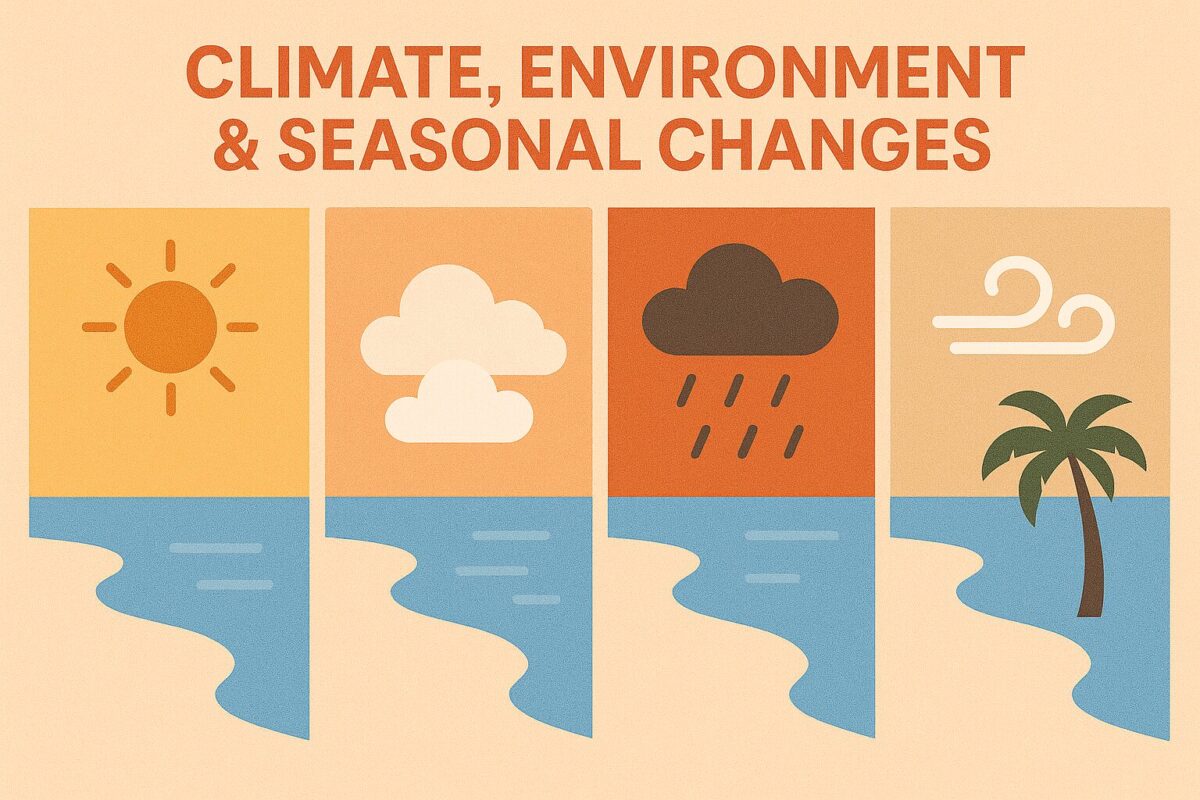
9. Climate, Environment and Pollution in Rayong Province
Before committing to living anywhere in Thailand, it helps to understand the climate and environmental conditions you will face throughout the year. Rayong has a typical Gulf of Thailand coastal climate, with a long hot season, a wet season that is predictable but sometimes intense, and a short cooler period that locals consider winter even if you are still wearing shorts.
The environment in Rayong is shaped by both natural beauty and industrial development. The beaches and coastline offer fresh air and open spaces, while the industrial belt can bring occasional air quality concerns. This mix is part of what makes Rayong unique, and understanding it helps you choose the right area for long-term living.
9.1 Weather Overview: What to Expect Throughout the Year
Rayong’s weather follows three main seasonal patterns.
Hot Season (February to May)
This is the warmest time of year. Daytime temperatures often reach the mid-30s, sometimes higher, especially in April. Coastal breezes help, but inland areas can feel very hot. The sea is calm during this period, and days are typically sunny.
This is a great time for beach life, Koh Samet trips and outdoor activities, provided you stay hydrated.
Rainy Season (May to October)
Rayong’s rainy season is usually predictable. Expect:
- Short, heavy showers
- Thunderstorms on some days
- Warm temperatures
- Occasional rough sea conditions
It rarely rains all day, but there will be weeks when it feels like showers appear every afternoon. Beaches look different during the rainy season, and certain parts of the coastline can accumulate debris after storms.
For long-stayers, the rainy season is simply part of life, and most people adjust quickly.
Cool Season (November to January)
Rayong’s cool season is mild compared to northern Thailand. Temperatures range from the mid-20s to low 30s, with lower humidity, blue skies and calmer conditions.
This is the best time of year for outdoor living. Beaches are at their most pleasant, and day-to-day life feels comfortable. It is also the most popular time for Thai tourists, so weekends can be busier around Ban Phe, Mae Ramphueng and Mae Phim.
9.2 Air Quality and Industrial Pollution
Rayong has two very different environmental realities depending on where you live.
Near the Industrial Belt
The areas around Map Ta Phut and parts of Ban Chang can experience occasional air quality issues due to industrial activity. This includes:
- Elevated particle levels on some days
- Industrial odours depending on wind direction
- Heavier traffic around factories and ports
Most long-stay expats who work in the industrial zones are aware of these conditions and usually choose to live slightly outside the heaviest industrial areas to balance convenience with air quality.
Along the Coast
Coastal areas generally enjoy better air circulation thanks to sea breezes. Mae Ramphueng, Suan Son, Ban Phe, Mae Phim and the eastern coast all tend to feel fresher and more open, with fewer air quality concerns.
However, seasonal weather can still influence air patterns. On very still days, even coastal areas may feel warm and hazy, but this is common across southern Thailand, not unique to Rayong.
Rayong City
Rayong city sits between the coast and industrial zones. Air quality is usually typical for a Thai provincial city: a mix of traffic pollution, humidity and occasional seasonal haze.
Overall, Rayong is manageable for most people, but sensitive individuals may prefer to avoid living too close to the industrial estates.
9.3 Beach Conditions and Water Quality
Rayong’s beaches are pleasant and varied, but they do not always look the same throughout the year.
Seasonal changes
Beaches can look very different during high season compared to the rainy season. After storms, floating debris can wash ashore on certain stretches of coast. Some beaches remain clean year-round, while others require more active maintenance.
This is normal for Gulf coast provinces and not specific to Rayong.
Swimmable beaches
Mae Ramphueng, Suan Son, Laem Mae Phim and several smaller coves offer good swimming conditions during much of the year. Waves and currents can increase during the rainy season.
Marine life
You may encounter jellyfish at certain times of year. Local authorities often put up warning signs when they appear in larger numbers.
National park beaches
Beaches inside the national park and on Koh Samet are generally better maintained and cleaned more frequently, especially during high season.
9.4 Waste Management and Cleanliness
The province has improved its waste management in recent years, especially along the more popular beaches. However, you may still see:
- Local litter on holidays or busy weekends
- Washed-up debris after storms
- Inconsistent beach cleaning in less developed areas
This is one of the trade-offs of living in a non-touristy, local-dominated province. On the positive side, weekdays are usually peaceful and clean, and many long-term residents choose their base by visiting different beaches during various seasons.
9.5 Mosquitoes and Insects
Like most of Thailand, Rayong has mosquitoes year-round, especially near water and greenery. Coastal areas usually have fewer compared to inland zones, but protection is still needed.
Good screens, fans and regular cleaning help keep insects under control.
9.6 Natural Hazards
Rayong does not experience typhoons, major flooding events or extreme weather compared to other parts of Southeast Asia. Periodic flooding can occur in low-lying areas during heavy downpours, but these events are usually short-lived.
The province occasionally experiences stronger winds during monsoon season, but day-to-day life is rarely disrupted.
9.7 Choosing Where to Live Based on Environment
Here is a quick guide to match your environmental preferences with the right area:
- If air quality is your priority, choose the coast between Ban Phe and the eastern beaches.
- If you want consistent breezes and cooler nights, coastal areas are generally best.
- If you are sensitive to industrial zones, avoid living too close to Map Ta Phut.
- If you want quiet and clean beaches, the eastern coastal strip near Mae Phim is a good fit.
- If you prefer a mix of city convenience and coastal access, Rayong city or Ban Phe offers the best balance.
9.8 Summary: Climate and Environmental Realities in Rayong
Rayong has a warm coastal climate, predictable seasons and plenty of sunshine. The beaches are enjoyable, especially from November to January, and Koh Samet offers year-round island escapes.
The industrial areas do bring environmental challenges, but these are localised, and most long-stayers simply choose to live in parts of the province with fresher air and fewer factories.
Overall, Rayong offers a very liveable environment, especially for retirees, workers and long-stay visitors who want a coastal lifestyle with access to city amenities and a nearby island.

10. Pros and Cons of Living in Rayong Province
Every place in Thailand offers a different blend of lifestyle, cost, convenience and atmosphere. Rayong is no exception. The province has a loyal following among long-stayers who appreciate its down-to-earth lifestyle, stable economy and coast-meets-city balance. At the same time, it has a few drawbacks that make it unsuitable for people looking for nightlife, big expat crowds or postcard-perfect beaches every day.
This section summarises the practical advantages and disadvantages of choosing Rayong as a long-term base.
10.1 The Pros of Living in Rayong
1. Affordable Cost of Living
Rayong offers some of the best value on Thailand’s eastern coast. Rent is lower than Pattaya and dramatically cheaper than beach towns in the south. Daily expenses such as food, utilities and transport remain manageable. For people on pensions, fixed incomes or local salaries, Rayong is a province where money stretches further without sacrificing comfort.
2. A Real Thai Lifestyle
Rayong is not a tourist showcase. Daily life feels Thai, from the local markets to the food to the beaches filled with families on weekends. If you prefer a local environment over a tourist bubble, this is one of Rayong’s biggest strengths.
3. Long Beaches and a Variety of Coastal Areas
The coastline gives you everything from busy Thai picnic beaches to quiet, laid-back stretches where you can walk for ages. It is not a flashy coastal region, but it is practical, peaceful and enjoyable for everyday life.
4. Koh Samet on Your Doorstep
This is one of Rayong’s greatest perks. Being able to reach a beautiful island quickly is a huge advantage. Many long-stayers take regular weekday trips when the island is quiet. It adds a dose of tropical escape to an otherwise down-to-earth province.
5. Proximity to Pattaya and Bangkok
Rayong is close enough to reach Pattaya within an hour and Bangkok within two to three hours. This gives you easy access to:
- International restaurants
- Specialist hospitals
- International schools
- Shopping centres
- Embassy services
- Cultural events
This combination makes Rayong practical as a long-term base.
6. Stable Economy with Real Job Opportunities
Rayong’s industrial sector provides steady employment for foreigners in engineering, logistics, quality control, management and teaching. This makes Rayong more stable than provinces that rely heavily on tourism.
7. Less Crowded Than Other Coastal Provinces
Rayong has visitors, but it is far from being a mass-tourism destination. You can find quiet beaches, peaceful residential areas and low-traffic roads outside peak hours.
8. Good Healthcare Options Nearby
Rayong has decent healthcare within the province and easy access to major hospitals in Pattaya and Bangkok. For everyday medical needs, you will not need to leave the province at all.
10.2 The Cons of Living in Rayong
1. Limited Nightlife and Social Scene
Rayong is not a nightlife hub. Rayong city has Thai-style pubs, Ban Chang has a small expat bar scene, and coastal areas have relaxed restaurants, but the overall nightlife is quiet. If you want constant entertainment, you will end up in Pattaya frequently.
2. Industrial Areas Can Affect the Environment
Parts of Rayong, especially near Map Ta Phut, experience occasional air quality issues. These areas are still popular with workers due to convenience, but many long-stayers choose to live further from the industrial belt.
3. Public Transport Is Limited
Songthaews operate on fixed routes, but beyond those, Rayong is a province where you need a motorbike or car to live comfortably. Grab is limited outside Rayong city.
4. Beaches Are Not Perfect Year-Round
Rayong’s beaches can look wonderful at certain times of year and less appealing after storms. Some stretches collect debris during the rainy season. You need to choose your beach area carefully if coastal life is important.
5. Less English Spoken Compared to Tourist Areas
In Rayong, you are firmly in Thai-speaking territory outside the industrial workforce and a few service areas. This is part of the charm for many long-stayers, but it can be challenging for new arrivals.
6. Fewer Western Amenities in Coastal Towns
If you are used to the convenience of Chiang Mai, Pattaya or Bangkok, you may miss things like large Western supermarkets, imported food shops or co-working hubs. Rayong has enough to live comfortably, but not enough to feel international.
7. Fewer International Schools
Families with children may find schooling options more limited compared to Bangkok or Pattaya. Rayong has bilingual schools, but full-scale international schools are mainly located in Pattaya.
8. Social Circles Take Time to Build
Rayong does not have large expat neighbourhoods. Meeting new people usually requires joining activities, going to gyms, connecting through work, or visiting Ban Chang or Pattaya for social life.
10.3 Summary: Is Rayong Right for You?
Rayong is a smart choice for people who want:
- A lower cost of living
- Easy access to beaches
- A comfortable, local, Thai environment
- A stable economic base
- Good access to Pattaya and Bangkok
- A quieter, more balanced lifestyle
It is not ideal for those wanting:
- Big nightlife
- A large expat community
- International dining and entertainment
- An English-speaking environment
- Perfect beaches without seasonal changes
Rayong is a province that rewards people who value authenticity, calmness and practicality. If your idea of a perfect Thailand involves beaches, simple living, seafood, frequent island trips and the ability to save money, Rayong is one of the most underrated options in the country.
11. How Rayong Compares to Other Thai Expat Hubs
Choosing where to live in Thailand is rarely simple. Each region has a very distinct personality, cost level and social environment. Rayong sits in a unique position: close to Bangkok, quieter than Pattaya, cheaper than Phuket and more coastal than Chiang Mai.
This section compares Rayong to other popular expat destinations to help you decide whether its mix of lifestyle and practicality fits what you want.
11.1 Rayong vs Pattaya
Lifestyle
Pattaya is louder, busier, more tourist-focused and has a huge expat population. Rayong is calmer and more Thai. Pattaya offers endless entertainment, international restaurants and nightlife. Rayong offers beaches, fishing villages, markets and Thai family life.
Cost of living
Rayong is significantly cheaper for rent and daily expenses. Pattaya has more options but also higher prices, especially near the coastline.
Transport
Pattaya wins in public transport and Grab availability. Rayong requires your own vehicle in most areas.
Beaches
Rayong’s beaches are longer and more natural. Pattaya’s beaches are busier and more urban but the city has easy boat access to Koh Larn.
Who chooses Rayong
People who want quiet coastal life, lower costs and easy access to Pattaya’s conveniences without living in the middle of them.
11.2 Rayong vs Bangkok
Lifestyle
Bangkok offers everything: world-class restaurants, nightlife, hospitals, cinemas, shopping, cultural attractions and international communities. Rayong provides a slower pace, beaches, local markets and more affordable living.
Cost of living
Bangkok is far more expensive for accommodation and lifestyle extras. Rayong is much cheaper, especially for housing.
Transport
Bangkok has modern mass transit. Rayong relies on motorbikes and cars. Living in Rayong without your own transport is difficult.
Environment
Bangkok has pollution and traffic but incredible convenience. Rayong has cleaner air along the coast, more space and a gentler daily rhythm.
Who chooses Rayong
People who prefer space, quiet beaches and lower living costs, but still want Bangkok close enough for regular visits.
11.3 Rayong vs Chiang Mai
Lifestyle
Chiang Mai is a cultural and café hub known for festivals, co-working spaces, mountains and a large digital nomad scene. Rayong is not culturally driven or trendy. It is coastal, practical and grounded.
Cost of living
Both provinces are affordable. Chiang Mai’s food and rent are cheap, but Rayong’s coastal areas still provide excellent value for money.
Weather
Chiang Mai has a cool season but also a smoke season with heavy haze. Rayong has a stable coastal climate with better air circulation.
Scenery
Chiang Mai has mountains, forests and temples. Rayong has beaches, islands and coastal parks.
Who chooses Rayong
People who want a coastal environment instead of a northern cultural city.
11.4 Rayong vs Hua Hin
Lifestyle
Hua Hin feels more polished. It has golf courses, quiet beaches, retirees, and a more developed expat community. Rayong is more local, less international and more spread out.
Cost of living
Hua Hin is more expensive, especially near the beach. Rayong remains the cheaper option for long-term renters.
Beaches
Hua Hin’s beaches are more developed but narrower. Rayong’s beaches are longer and more natural.
Transport
Hua Hin has better town infrastructure for walking. Rayong requires personal transport.
Who chooses Rayong
Retirees and long-stayers who want to avoid tourist hubs and prefer a more Thai-style coastal lifestyle.
11.5 Rayong vs Phuket
Lifestyle
Phuket is Thailand’s most international island with nightlife, luxury resorts, beaches, marinas and a large foreign population. Rayong is quieter and simpler.
Cost of living
Phuket is one of the most expensive places in Thailand. Rayong is far cheaper for rent, food and daily life.
Beaches
Phuket’s beaches are world-class. Rayong’s coastline is pleasant but not at the same level. Rayong’s advantage is value and calmness, not beauty.
Transport
Phuket has taxis, but traffic is heavy in high season. Rayong is easier to drive in but has less public transport.
Who chooses Rayong
People who want a coastal lifestyle without tourist pricing and high-density tourism.
11.6 Rayong vs Koh Samui
Lifestyle
Koh Samui is a resort island with a strong expat presence, good restaurants, beautiful beaches and a mix of luxury and local life. Rayong is more low-key and not as tourist-driven.
Cost of living
Rayong is cheaper for rent and everyday expenses. Samui is more expensive, especially near the beaches.
Transport
Samui has local transport options but is still heavily dependent on scooters. Rayong’s roads are more connected and less hilly.
Island life
Samui has island charm. Rayong offers easy access to Koh Samet but maintains a more grounded mainland environment.
Who chooses Rayong
People who want a quieter, more affordable coastal lifestyle without island logistics.
11.7 Rayong vs Chonburi (excluding Pattaya)
Chonburi province includes many smaller towns popular with industrial workers and families. The comparison here is close because both Chonburi and Rayong form part of the eastern seaboard economy.
Lifestyle
Rayong is more relaxed and has better beaches. Chonburi has denser urban areas and easier access to Bangkok.
Cost of living
Both are affordable, but Rayong’s coastal rentals tend to be better value.
Transport
Chonburi has better access to Bangkok’s transport networks. Rayong wins on beach proximity and island access.
Who chooses Rayong
People who want a calmer coastal environment within reach of Pattaya and Bangkok.
11.8 Summary: Rayong’s Place in Thailand’s Expat Map
Rayong sits neatly between the extremes of Thailand’s expat destinations. It offers a quiet coastal lifestyle without the high prices of Phuket, the intensity of Pattaya or the crowds of Bangkok. It has real beaches, a nearby island, a local Thai atmosphere and a stable industrial economy.
Rayong is not perfect for everyone. It is not glamorous. It is not a party place. It requires your own transport. But for long-stayers, retirees, remote workers and professionals who want an affordable, balanced and grounded life on the coast, Rayong stands out as one of the most underrated choices in Thailand.
12. Practical Tips for Settling in Rayong Province
Moving to Rayong is usually easier than people expect, but it still requires some local knowledge to avoid common headaches. Whether you are here for work, retirement, family life or long-term coastal living, a few simple adjustments will make your first months far smoother.
Below are the practical things long-stay residents usually learn only after living in Rayong for a while. These tips cover daily life, housing, transport, social connections, money management and staying comfortable year-round.
12.1 Visit Different Areas Before You Commit
Rayong is a big province with several distinct zones. The experience of living in Mae Ramphueng is completely different from living in Ban Chang or Rayong city. Before signing a lease or buying anything, spend time in each area to feel the atmosphere.
For example:
- Ban Chang suits workers, golfers and those who want nightlife without Pattaya levels of intensity.
- Rayong city suits people who want convenience, hospitals, schools and an urban Thai environment.
- Ban Phe suits people who want to be near Koh Samet and prefer a small-town feel.
- Mae Ramphueng and Suan Son suit beach-focused lifestyles with access to both city and coast.
- Mae Phim and the eastern beaches suit people who want quiet, cleaner beaches and a more relaxed expat community.
Choosing the right base makes everything else easier.
12.2 Find Housing That Fits Your Daily Routine
Housing in Rayong varies from cheap apartments to villas near the beach. Before committing, think about your routine:
- Will you be driving to Map Ta Phut daily?
- Do you prefer morning walks on the beach?
- Do you have children who need easy access to school?
- Do you want to be near nightlife in Ban Chang?
- Do you want to be close to Ban Phe for regular trips to Koh Samet?
Transport and convenience matter more in Rayong than in many other provinces because it is spread out.
Tips:
- Check how the area feels at night, not just in the daytime.
- Test the commute if you are working.
- Ask about water pressure and internet speed.
- Check if the roads flood during heavy rain.
- If living near the coast, check how windy or exposed the area becomes during monsoon season.
12.3 Transport: Assume You Will Need Your Own Wheels
Rayong has limited public transport and patchy Grab coverage. For almost everyone, life becomes dramatically easier once they have either:
- A motorbike
- A car
Motorbikes are good for the coast and urban areas. Cars are best if you:
- Work in the industrial zones
- Have a family
- Live further along the eastern beaches
- Plan regular trips to Pattaya or Bangkok
If you are not comfortable riding a motorbike, go straight to renting or buying a car.
12.4 Learn Basic Thai for Daily Life
You do not need to be fluent, but knowing simple Thai makes life smoother in Rayong because fewer people speak English compared to tourist-heavy provinces. Essential areas include:
- Ordering food
- Asking for directions
- Shopping at markets
- Talking to landlords
- Handling minor repairs or services
Even a small amount of Thai increases your comfort and reduces misunderstandings.
12.5 Get to Know the Layout of the Province
Rayong is long and stretched along the coast. Travel times can be longer than expected. A few minutes of research helps you avoid surprises.
Key areas:
- Rayong city sits inland.
- Ban Phe is the gateway to Koh Samet.
- Mae Ramphueng and Suan Son are coastal residential zones.
- Mae Phim is quieter and farther east.
- Ban Chang is halfway to Pattaya and close to U-Tapao airport.
Once you understand the layout, picking a home and planning your days becomes much easier.
12.6 Health and Comfort Tips
Small adjustments make a big difference in daily comfort:
- Use mosquito screens or electric coils during the rainy season.
- Keep drinking water stocked because tap water is not potable.
- Use fans and air-conditioning together to save energy and stay cool.
- Buy a small toolkit for quick home repairs.
- Keep a waterproof jacket on your motorbike during rainy months.
- Invest in good sun protection for beach days.
These habits become second nature after a few weeks.
12.7 Handling Paperwork Smoothly
Rayong immigration is predictable, but paperwork still matters.
Tips:
- Keep photocopies of your passport, visa pages and TM30 in a folder.
- Use the 90-day online system when possible.
- Double-check visa renewals early.
- If you work for a company, let HR handle the paperwork.
- If renting, confirm your landlord understands the TM30 process.
Most issues in Thailand come from missing documents rather than complicated rules.
12.8 Building a Social Life Without a Big Expat Crowd
Rayong’s expat population is small but steady. Social life usually grows out of:
- Gyms
- Golf courses
- Local bars and coffee shops
- Coworking-style cafés in the city
- Weekend trips to Koh Samet
- Meeting neighbours
- Chatting with locals at markets or small restaurants
Ban Chang has the most active expat bar scene. Rayong city has a younger mix of locals and foreigners. Mae Phim has a quieter, Scandinavian-influenced expat community. If socialising is important, choose your area with that in mind.
12.9 Money and Banking Tips
Most long-stayers in Rayong eventually set up basic financial routines:
- Open a Thai bank account if your visa allows it.
- Keep some cash on hand because smaller shops may not take cards.
- Use mobile banking apps for transfers.
- Withdraw larger amounts to avoid frequent ATM fees.
- Compare utility payment methods for electricity and internet to avoid late fees.
Prices are generally low, but managing money efficiently makes long-term life even easier.
12.10 Explore the Province Slowly
Rayong rewards slow exploration. Spend weekends visiting:
- Fishing villages
- Quiet beaches
- Fresh markets
- Seafood restaurants
- National park zones
- Coastal viewpoints
- The eastern border near Chanthaburi
The more you explore, the more you understand the appeal of living here.
12.11 Accept That Rayong Is Not a Tourist Playground
Rayong’s charm is that it is real, local and lived-in. You will not find international supermarkets on every corner or a nightlife strip with endless bars. Instead, you find a comfortable, affordable, predictable coastal lifestyle with a friendly local atmosphere.
For many long-stayers, this is exactly why they stay year after year.
12.12 Summary: How to Settle into Rayong Stress-Free
Living in Rayong becomes easy once you understand the basics:
- Choose the right area.
- Get your own transport.
- Learn simple Thai.
- Stay organised with paperwork.
- Explore the coastline.
- Be prepared for seasonal changes.
- Build a small routine and let life settle naturally.
Rayong does not overwhelm you. It grows on you slowly until one day you realise you have built a comfortable, low-cost, enjoyable life by the coast with access to Bangkok, Pattaya and Koh Samet whenever you want.
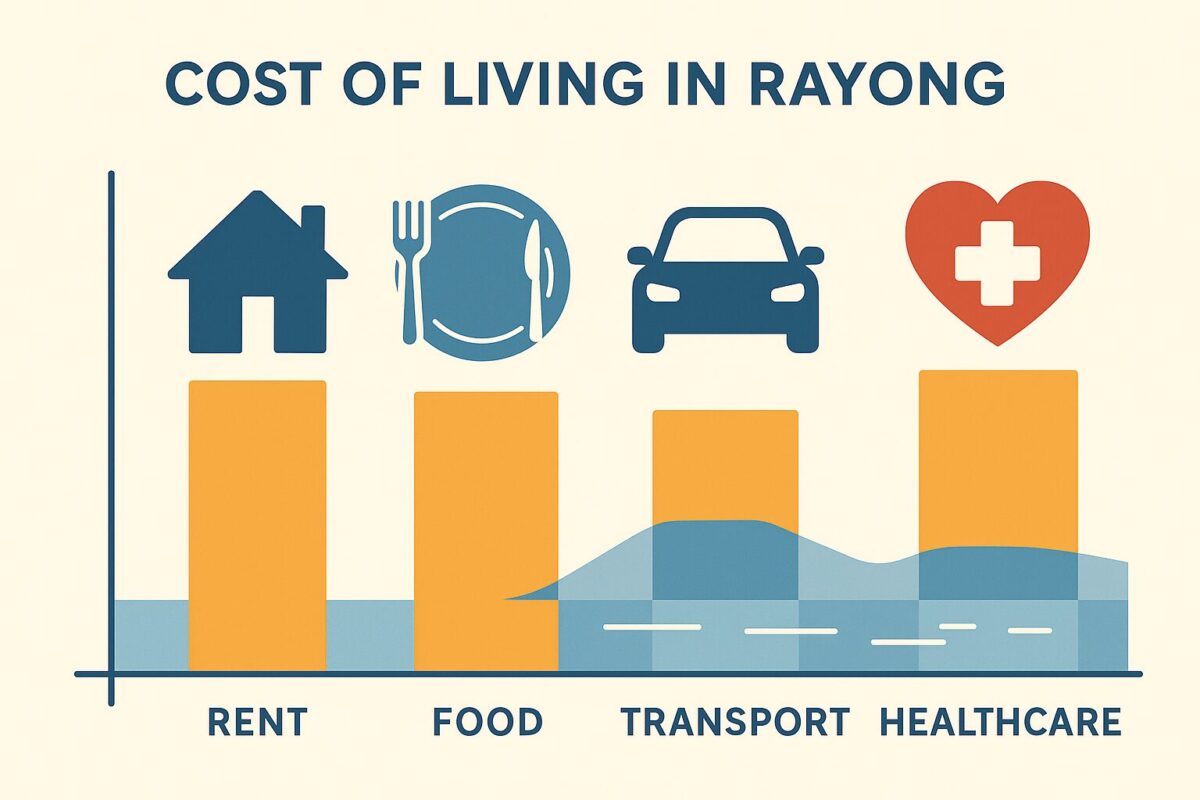
13. Cost of Living in Rayong Province (Detailed Breakdown)
Rayong is one of the best-value coastal provinces in Thailand. The combination of long beaches, a stable economy, access to Pattaya and Bangkok, and relatively low housing costs makes it attractive to retirees, teachers, workers in the industrial zones and long-stay expats who want a comfortable life without burning through their budget.
Costs will vary based on lifestyle, but Rayong consistently comes out cheaper than Pattaya, Hua Hin, Phuket and Koh Samui. This section breaks down the real costs of living here, including housing, food, utilities, transport, entertainment, healthcare and hidden expenses that newcomers often overlook.
13.1 Typical Monthly Budgets in Rayong
Everyone’s lifestyle is different, but these rough figures help set expectations.
Budget lifestyle (25,000 to 35,000 THB per month)
Works for: teachers, long-stay travellers, minimalists, some retirees.
Includes:
- Modest apartment
- Motorbike
- Street food and markets
- Basic utilities
- Occasional restaurant meals
- Simple entertainment
Not much room for imported food or frequent trips to Bangkok.
Comfortable lifestyle (40,000 to 60,000 THB per month)
Works for: most retirees, remote workers, couples, engineers with housing allowances.
Includes:
- Nice apartment or small house near the coast
- Regular dining out
- Local and imported groceries
- Motorbike or older car
- Occasional weekend trips to Koh Samet
- Gym membership
This is the most common range among long-stay expats.
Higher-end lifestyle (60,000 to 100,000+ THB per month)
Works for: families, remote workers with higher incomes, expats with corporate packages.
Includes:
- Modern townhouse or villa
- Newer car
- Frequent trips to Pattaya or Bangkok
- Imported groceries
- Private healthcare
- More Western-style dining
Still significantly cheaper than equivalent lifestyles in Phuket, Bangkok or Samui.
13.2 Housing Costs
Housing is where Rayong really stands out. Prices vary by area, property type and proximity to the beach.
Rayong City
- Studio or basic apartment: 5,000 to 10,000 THB
- One-bedroom apartment: 7,000 to 12,000 THB
- Modern condo: 10,000 to 18,000 THB
- Townhouse: 10,000 to 20,000 THB
- Larger house: 15,000 to 30,000 THB
City living is convenient for hospitals, shopping and schools.
Ban Phe and Mae Ramphueng
- Studio apartment: 6,000 to 9,000 THB
- One-bedroom apartment: 8,000 to 12,000 THB
- Small house: 12,000 to 18,000 THB
- Larger houses or villas: 18,000 to 30,000 THB
These areas suit people who want beaches and quick access to Koh Samet.
Mae Phim and Eastern Beaches
- Studio apartment: 6,000 to 10,000 THB
- One-bedroom condo: 9,000 to 15,000 THB
- Modern beach-area condos: 12,000 to 20,000 THB
- Houses or villas: 18,000 to 35,000 THB
Prices rise closer to the beach but remain lower than in more famous coastal provinces.
Ban Chang
- Apartment: 6,000 to 12,000 THB
- Townhouse: 10,000 to 16,000 THB
- Detached house: 15,000 to 25,000 THB
- Higher-end homes: 25,000 to 40,000 THB
Popular with industrial workers and people who want one foot in Pattaya without living there.
13.3 Food Costs
Food is surprisingly affordable in Rayong, especially if you stick to Thai dishes and local markets.
Street Food and Thai Restaurants
Single Thai dishes: 50 to 80 THB
Seafood dishes: 80 to 150 THB
Grilled chicken or pork: 60 to 100 THB
Noodles: 40 to 70 THB
Fried rice: 50 to 70 THB
Fruit shakes: 30 to 60 THB
Consistently cheaper than Pattaya or Samui.
Seafood Restaurants (Local Style)
Seafood by weight varies, but typical meals cost:
- 150 to 350 THB per person
- 500 to 1,200 THB for groups sharing fresh seafood
Ban Phe is particularly good value.
Western Food
Western meals: 150 to 300 THB
Imported meats: 300 to 600 THB per portion
Pizza: 200 to 400 THB
Cafe breakfast: 150 to 350 THB
Western food is noticeably cheaper than Pattaya or Phuket but still pricier than Thai food.
Groceries
- Vegetables and fruit: 20 to 60 THB
- Chicken/pork: 80 to 120 THB per 100g
- Eggs: 100 to 120 THB per dozen
- Bread: 40 to 80 THB
- Milk: 70 to 100 THB
- Imported cheese: 200 to 400 THB
- Imported cereals: 150 to 300 THB
Market shopping keeps costs low.
13.4 Utilities and Internet
Utilities are generally affordable unless you run air-conditioning all day.
Electricity
- Light usage: 800 to 1,500 THB per month
- Moderate usage: 1,500 to 3,000 THB
- Heavy AC use: 3,000 to 5,500 THB
Water
- 100 to 300 THB per month for a house
- Occasionally more in condos with private rates
Internet
Fast fibre internet is widely available.
- Monthly plans: 400 to 800 THB for most households
Mobile phone packages
- 200 to 800 THB per month depending on data needs
13.5 Transport Costs
Transport depends on whether you use a motorbike or car.
Motorbike
- Monthly petrol: 300 to 700 THB
- Rentals: 2,500 to 4,000 THB per month
- Purchase (used): 15,000 to 40,000 THB
- Repairs and servicing: cheap and widely available
Car
- Petrol: 2,000 to 4,000 THB
- Routine maintenance: 1,000 to 3,000 THB
- Insurance: 6,000 to 15,000 THB annually depending on coverage
Public Transport
- Songthaews: 10 to 30 THB
- Minivans to Pattaya or Bangkok: 150 to 250 THB
- Buses: 150 to 200 THB
Grab
Available mostly in Rayong city.
Prices vary widely but are higher than songthaews and not reliable along the coast.
13.6 Entertainment and Social Life Costs
Rayong’s entertainment scene is grounded and affordable.
Bars and restaurants
- Local beers: 60 to 90 THB
- Imported beers: 120 to 180 THB
- Cocktails: 150 to 300 THB
- Beachfront restaurants: 150 to 300 THB per person
- Thai-style pubs: 250 to 600 THB per person
Gyms and Fitness
- Local gyms: 600 to 1,200 THB per month
- More modern gyms: 1,200 to 2,000 THB
- Yoga or pilates drop-in: 200 to 400 THB
Cinema (in Rayong city)
- 120 to 250 THB per ticket
Koh Samet trips
- Ferry: 100 to 200 THB
- Speedboat: 200 to 300 THB
- Day trip expenses: 300 to 1,000 THB depending on food and drinks
13.7 Healthcare Costs
Rayong offers affordable healthcare for individuals and families.
Private hospitals
- GP consultation: 300 to 800 THB
- Specialist consultation: 500 to 1,200 THB
- X-ray: 300 to 800 THB
- Blood tests: 500 to 2,000 THB
- Annual checkups: 2,000 to 7,000 THB
Dental
- Cleaning: 700 to 1,200 THB
- Filling: 700 to 1,500 THB
- Whitening: 3,000 to 7,000 THB
Insurance
- Thai insurance plans: 10,000 to 30,000 THB per year
- International plans: 30,000 to 80,000+ THB per year depending on age
Healthcare in Pattaya or Bangkok is more expensive but still reasonable by Western standards.
13.8 Hidden or Unexpected Costs
A few expenses tend to catch newcomers off guard.
- Visa renewals
- 90-day reporting trips
- TM30 compliance
- Agency fees (optional but convenient)
Car or motorbike repairs
Small repairs are cheap but frequent if you buy an older vehicle.
Imported food cravings
Buying imported cheese, craft beer or Western snacks can add up quickly.
Trips to Pattaya or Bangkok
Budget for occasional city trips for shopping, social life or specialist care.
13.9 Summary: Rayong’s Overall Cost Advantage
Rayong offers a rare balance: coastal living with manageable expenses and access to a major island without paying tourist prices. Housing is affordable, food is cheap, transport is straightforward and everyday life does not feel financially heavy.
You can live well here on a modest budget, and you can live very comfortably without needing a high income. For retirees, long-stay expats, teachers, remote workers and professionals, Rayong remains one of the best-value places to live on Thailand’s eastern coast.

14. Who Is Rayong Best For?
Rayong is not a mainstream expat hotspot, which is precisely why many people end up loving it. It is a province that rewards a certain kind of person: someone who values affordability, everyday comfort, Thai culture and practical living over nightlife, big crowds or Instagram-style beaches.
This section helps readers understand whether Rayong suits their lifestyle, goals and expectations.
14.1 Retirees Seeking a Quiet, Affordable Coastal Life
Rayong is one of the best provinces in Thailand for retirees who want:
- Lower rent and living costs
- A peaceful environment
- Proximity to a beach
- Access to good healthcare
- A local lifestyle rather than a tourist scene
- Easy weekend trips to an island (Koh Samet)
- Short drives to Pattaya and Bangkok when needed
Retirees who prefer a slower pace settle along the coast near Mae Ramphueng, Suan Son or Mae Phim. Those who want more convenience choose Rayong city or Ban Chang.
Rayong works especially well for retirees who do not need nightlife or a large expat scene but want comfort, value and a friendly community.
14.2 Engineers and Professionals Working in the Industrial Sector
Rayong is one of Thailand’s industrial engines. Foreign professionals come for engineering, management, chemical processing, safety, logistics and petrochemical roles.
Rayong suits these workers because:
- Jobs are stable and well-paid
- Companies often provide housing allowances
- Commutes are manageable
- The province offers a calmer lifestyle after work
- Pattaya and Bangkok are close enough for weekend trips
Most working expats live in Ban Chang, Rayong city or around the Map Ta Phut corridor, choosing convenience over beachfront living.
14.3 Teachers and Education Professionals
Rayong’s mix of public schools, private schools and bilingual programmes creates steady demand for English teachers and subject teachers.
Teachers choose Rayong because:
- Cost of living is lower than Bangkok
- Jobs are stable and often long-term
- Communities feel safe and family-oriented
- Beaches and Koh Samet offer easy relaxation
- Commuting is easier than in larger cities
Rayong city is the top choice for teachers because of its schools, transport and amenities.
14.4 Remote Workers and Online Professionals
Rayong is not marketed as a digital nomad hub, but many remote workers choose it for long-term living because it offers:
- Fast fibre internet
- Lower rent than Chiang Mai or Bangkok
- Quiet coastal environments
- Access to Koh Samet for breaks
- Reasonable travel times to Bangkok
- A calmer atmosphere for productivity
Remote workers who prefer quieter, stable environments over social nomad scenes thrive here.
14.5 Families with Children
Rayong can work well for families, especially those who appreciate space and a calmer environment.
Advantages for families include:
- Affordable housing with gardens
- Safe neighbourhoods
- Bilingual and private school options
- Clean beaches (especially Mae Phim area)
- Easy access to Pattaya’s international schools
- Proximity to healthcare and shopping in Rayong city
Families often live in Rayong city, Ban Chang or the Mae Phim area, depending on work and school needs.
14.6 Long-Stayers Looking for a Low-Stress Lifestyle
Some people come to Rayong simply because it feels less stressful than Pattaya, cheaper than Samui and more grounded than many tourist destinations.
Rayong suits those who:
- Want beaches without tourism crowds
- Prefer low costs without sacrificing comfort
- Appreciate local culture
- Value easy access to a nearby island
- Want a provincial lifestyle with city conveniences
- Don’t need constant social activity
If you enjoy creating your own routine rather than relying on big expat networks, Rayong fits very well.
14.7 People Who Already Know Thailand and Want Something Different
Rayong attracts many expats who have already lived elsewhere in Thailand. They move because they want:
- A quieter environment than Pattaya
- A less tourist-heavy vibe than Phuket
- Better beaches than Hua Hin
- Lower prices than Koh Samui
- A coastal option closer to Bangkok than Trat or Ranong
Rayong appeals to people who understand the country and want a place that feels real, lived-in and practical rather than overdeveloped.
14.8 People Who Should Probably Choose Somewhere Else
Rayong is not ideal for everyone, and it helps readers understand this clearly.
Rayong is probably not the right choice if you want:
- Big nightlife and entertainment
- A large, established expat community
- Dozens of international restaurants
- Walkable neighbourhoods
- Co-working hubs and trendy cafés
- Postcard beaches every day of the year
- Public transport you can rely on
Better alternatives include:
- Pattaya for nightlife and social energy
- Bangkok for urban convenience
- Chiang Mai for culture and nomad life
- Koh Samui or Phuket for polished beaches and international dining
- Hua Hin for a more established expat community
Rayong is perfect if you want low-key comfort and coastal life, not if you want a busy, social, international scene.
14.9 Summary: Who Thrives in Rayong
Rayong is best suited to:
- Retirees
- Teachers
- Engineers
- Corporate professionals
- Remote workers
- Couples
- Quiet lifestyle seekers
- Experienced expats
- Families wanting more space
It is a province where you can live comfortably, affordably and without the intensity of tourist regions. Rayong’s strength is not glamour but balance: beaches, city convenience, affordability and access to Koh Samet all wrapped into one very liveable coastal province.

15. Final Thoughts – Is Rayong the Right Choice for You?
Rayong is one of Thailand’s most underrated provinces for long-term living. It doesn’t make headlines, it doesn’t chase influencers and it doesn’t try to reinvent itself as a tourist hotspot. And that is exactly why so many long-stayers quietly choose it over more famous destinations.
Rayong rewards people who want a calm, affordable, real Thai lifestyle on the coast. It gives you long beaches, friendly communities, good food, a stable economy, easy access to Koh Samet and close links to Pattaya and Bangkok. It offers a more grounded version of Thailand where the cost of living stays manageable and life settles into an easy rhythm.
If your idea of Thailand is nightclubs, constant entertainment, craft cocktail bars and giant Western supermarkets, Rayong probably isn’t for you. But if you want open beaches, fresh seafood, simple comforts and a home base that feels genuinely lived-in rather than curated for tourists, Rayong can be a very satisfying place to settle.
It is the kind of province where you learn your favourite noodle stall, start recognising neighbours, figure out the best days to visit the markets, and develop a weekly routine that quietly becomes a lifestyle. You feel connected without being crowded, and you enjoy the coast without paying tourist prices.
Rayong isn’t perfect, but it is balanced.
It is calm without being dull, affordable without feeling limited, and practical without losing its coastal charm. For retirees, teachers, professionals, remote workers, families and anyone seeking a softer landing on Thailand’s eastern seaboard, Rayong remains one of the smartest and most overlooked choices in the country.
If everything you have read in this guide feels like it matches what you want, there is a good chance Rayong could be the right place for you. And the beauty of Rayong is this: you do not need to decide right away. Come for a month. Try different neighbourhoods. Explore the beaches. Take a few midweek trips to Koh Samet. See how life feels.
Most people who end up staying long-term don’t make that decision on the first day. It just happens slowly, almost without noticing, when they realise that life in Rayong is simple, affordable and quietly enjoyable in a way that is hard to find elsewhere.
Rayong Province FAQ
Is Rayong a good place to live for expats?
Yes. Rayong is affordable, safe and close to long beaches. It has good everyday facilities, a local Thai atmosphere and easy access to Pattaya and Bangkok. It suits people who want a calm, practical coastal lifestyle.
How much does it cost to live in Rayong per month?
Most long-stay expats spend 35,000 to 60,000 THB per month. Retirees and remote workers can live comfortably within this range. Costs are lower than Pattaya, Hua Hin, Phuket and Koh Samui.
Which areas in Rayong are best for foreigners?
Popular areas include:
-
Rayong City (convenience, hospitals, supermarkets)
-
Ban Chang (closest to Pattaya, active expat scene)
-
Ban Phe (gateway to Koh Samet)
-
Mae Ramphueng and Suan Son (quiet beaches)
-
Mae Phim (cleaner beaches, relaxed expat community)
Are the beaches in Rayong clean?
Beaches are clean during high season but can collect debris after storms in the rainy season. Mae Phim and Suan Son are usually the cleanest. Conditions change with weather and tides.
Is Rayong safe?
Yes. Rayong is considered safe for both expats and families. Most areas have low crime rates. Normal precautions apply, especially in nightlife areas of Ban Chang.
Does Rayong have good hospitals?
Rayong has several good private and public hospitals. For specialist care, residents often use hospitals in Pattaya or Bangkok, both within easy driving distance.
Do I need a car or motorbike to live in Rayong?
Yes. Rayong has limited public transport and unreliable Grab coverage outside the city. Most long-stayers use a motorbike or car daily.
What is the weather like in Rayong?
Rayong has a warm coastal climate:
-
Hot season: Feb–May
-
Rainy season: May–Oct
-
Cool season: Nov–Jan
Weather is predictable, with sea breezes along the coast.
Is Rayong polluted because of the industrial areas?
Industrial zones near Map Ta Phut can have occasional air quality issues. Coastal areas like Ban Phe, Mae Ramphueng and Mae Phim usually have better air circulation and lower pollution.
Can I work in Rayong as a foreigner?
Yes. Most foreign workers are in engineering, petrochemicals, logistics, quality control, management and teaching. A proper work visa and work permit are required.
Is Rayong good for families with children?
Yes. Rayong has safe neighbourhoods, affordable housing and bilingual schools. Families needing international schools often commute to Pattaya.
Is Rayong cheaper than Pattaya?
Yes. Rent, food, daily expenses and lifestyle costs are noticeably lower in Rayong. Pattaya has more entertainment but at higher prices.
How far is Rayong from Bangkok?
Around 2.5 to 3 hours by car depending on traffic and starting location. Suvarnabhumi Airport is typically reachable in under 2.5 hours.
How easy is it to visit Koh Samet from Rayong?
Very easy. Ban Phe pier is the gateway to Koh Samet. Ferries and speedboats run daily, and travel time to the island is 15–30 minutes.
Is Rayong good for remote workers or digital nomads?
Yes, if you prefer quiet surroundings. Rayong has fast fibre internet and affordable housing. It is not a trendy nomad hub, but it is excellent for people who want a calmer, more focused environment.